Bookmarks
A collection of interesting resources, links, and bookmarks I've saved.
-
Posted Mar 10
Excited to share my latest project, Oil, a visually appealing dark theme designed for clarity — enhancing the coding & productivity experience with a well-thought-out colour palette.
Enjoy high-contrast text for effortless eye relaxation across VS Code, Cursor, iTerm2, Ghostty, Slack, Raycast and more coming soon.
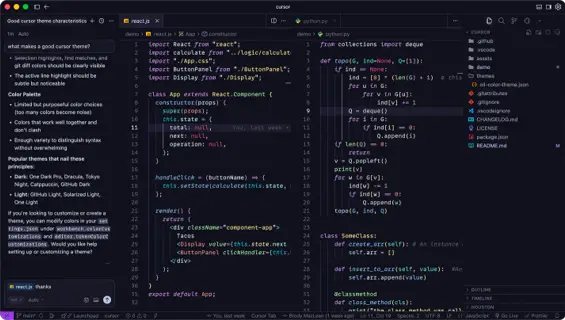
🛢️ Oil theme

github.com
🛢️ Oil theme
github.com
-
Posted Feb 27
AI safety researcher quits Anthropic, warning that ‘the world is in peril’ and moves to study poetry.
When an Anthropic safety lead says ‘the world is in peril’ and walks away, maybe we should listen.
The world is in peril. And not just from AI, or bioweapons, but from a whole series of interconnected crises unfolding in this very moment.
Anthropic AI safety researcher quits with 'world in peril' warning

bbc.com
Anthropic AI safety researcher quits with 'world in peril' warning
bbc.com
-
Posted Feb 26
The green LED was replaced by a white one, but “pulsating light indicates that the computer is sleeping” buried the nicest part of it – the animation was designed to mimic human breathing at 12 breaths per minute, and feel comforting and soothing.
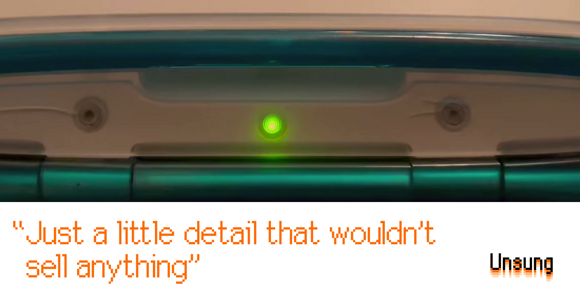
Just a little detail that wouldn’t sell anything

unsung.aresluna.org
Just a little detail that wouldn’t sell anything
unsung.aresluna.org
-
Posted Feb 26
WDYT?
I got a Slack message the other week, just “What do you think?” with a link to a Notion document.
No context or indication of what this person actually believed. Just a link and a question mark.
I stared at it for a minute, trying to decide if I was annoyed or just tired (both, probably).
What’s this message is actually saying is: “I haven’t figured this out yet and I’d like you to do the thinking for me.”
Why Am I Doing the Thinking for You?

terriblesoftware.org
Why Am I Doing the Thinking for You?
terriblesoftware.org
-
Posted Feb 17
Product design is fundamentally changing as AI shifts the focus from Figma mockups to code-based orchestration and machine-readable systems, elevating the designer’s role in visible, user-facing quality that automation can’t fully replicate
Design leads spend about 80% of their time on communication, alignment, and justification. Not on hands-on design work. Every design decision carries a “justification tax”: the time spent explaining, documenting, and defending choices that other disciplines make in a quick conversation.
AI should be targeting that 80%, not the mockup work. Use it to synthesise meeting notes, draft stakeholder communications, generate research summaries, and build quick prototypes that settle debates with data instead of opinions.
Product Design Is Changing

rogerwong.me
Product Design Is Changing
rogerwong.me
-
Posted Feb 16
Every product reaches a point where it becomes too complex to be useful in order to meet the needs of the business.
The biggest problem is that product teams are incentivised to add more features, not to improve the foundations of the product, so it’s impressive, at Slacks trajectory in 2020, that they were self-aware enough to identify and address things from the ground up.
We found ourselves shipping a kitchen drawer full of useful tools to our customers – knives and forks, spatulas and whisks, tongs and corkscrews, hell even a few citrus zesters and melon ballers – but everything was so jammed together that you couldn’t find what you were looking for. Look out for the mandolin in the back.
It was a mess. We were at a tipping point of product complexity. While we were preoccupied re-engineering our codebase into a scalable service and reorganizing our company into a public-ready business, our product had suffered. Inertia, complexity, and feature creep had caught up to us. Entropy was setting in.

Rethinking Slack

buildingslack.com
Rethinking Slack
buildingslack.com
-
Posted Jan 31
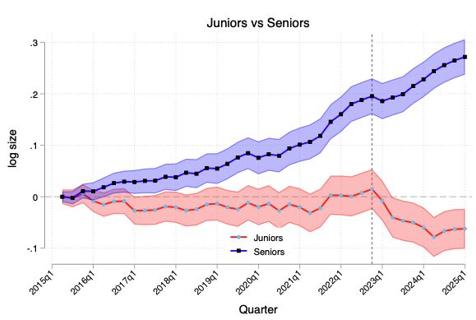
The K-Shaped Future of Software Engineering
A ton of stuff here applies to Design and Product too.
Ian Tracey discusses the evolving landscape of software engineering, emphasising a “K-shaped” future where some skills become increasingly valuable while others diminish.
The K-Shaped Future of Software Engineering
ian.so
The K-Shaped Future of Software Engineering
ian.so
-
Posted Jan 23
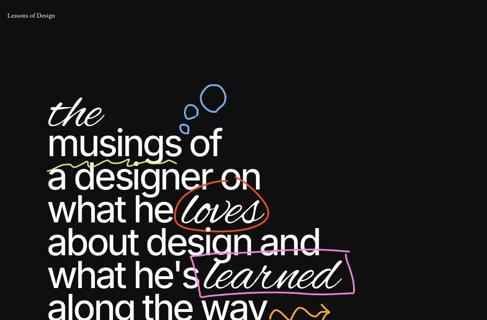
The musings of Fabricio Teixeira on what he loves about design and what he’s learned along the way.
Lessons of Design

lessons.design
Lessons of Design
lessons.design
-
Posted Jan 12
I have to admit, I have to agree with Jason Fried on this one — and admit that my house has a lot of these problems.
Neither my wife nor I could tell you what each of the buttons on our Philips Hue tap dial switches do. So much so that I’ve had to set a reminder to turn on all our lights and disable the auto-lock from the front door when the cleaners are coming.
Which reminds me…
Jason Fried writes on his blog:
The TV is the latest Samsung which has a baffling UI just to watch CNN. My parents aren’t idiots, but definitely feel like they’re missing something obvious. They aren’t — TVs have simply gotten worse. You don’t turn them on anymore, you boot them up.
Thermostats… Nest would have been an upgrade, but these other propriety ones from some other company trying to be nest-like are baffling.
And the lag. Lag everywhere. Everything feels a beat or two behind. Everything. Lag is the giveaway that the system is working too hard for too little. Real-time must be the hardest problem.
The big regression
world.hey.com
The big regression
world.hey.com
-
Posted Jan 6
A very well crafted essay from Nikita Prokopov.
If you’ve looked at MacOS 26 Tahoe, you’re surely appalled by the new UI guideline that recommends putting icons next to every single menu item.
Prokopov argues — with copious screenshot illustrations every step of the way — that this is a terrible idea in the first place, and that Apple has implemented it poorly.

Sequoia → Tahoe 
It’s hard to justify Tahoe icons

tonsky.me
It’s hard to justify Tahoe icons
tonsky.me
-
Posted Dec 29, 2025
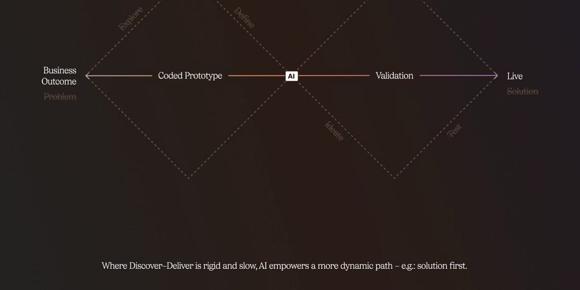
The craft bar keeps rising. Good is no longer good enough, and taste becomes leverage. Designers, PMs & engineers with strong product taste will stand out.
Tom Scott writes on his blog:
- AI is making the best designers more productive
- Hands-on is the new default, regardless of level
- You need to be fluent in systems NOT just pixels
- The role of a ‘designer’ will shift to being a curator.
- Show actual work to find a new job
- Design/eng/product roles are merging QUICK
The future of product design

verifiedinsider.substack.com
The future of product design
verifiedinsider.substack.com
-
Posted Dec 16, 2025
An interesting ongoing story about the fragility of your digital life and howeven a single dependancy failing could brick your entire life.
Another good reason to backup and move towards a file over app setup.
Dr Paris Buttfield-Addison writing on his blog:
A major brick-and-mortar store sold an Apple Gift Card that Apple seemingly took offence to, and locked out my entire Apple ID, effectively bricking my devices and my iCloud Account, Apple Developer ID, and everything associated with it, and I have no recourse.
20 Years of Digital Life, Gone in an Instant, thanks to Apple
hey.paris
20 Years of Digital Life, Gone in an Instant, thanks to Apple
hey.paris